
Oslo to Bergen by campervan – a round trip with two different routes
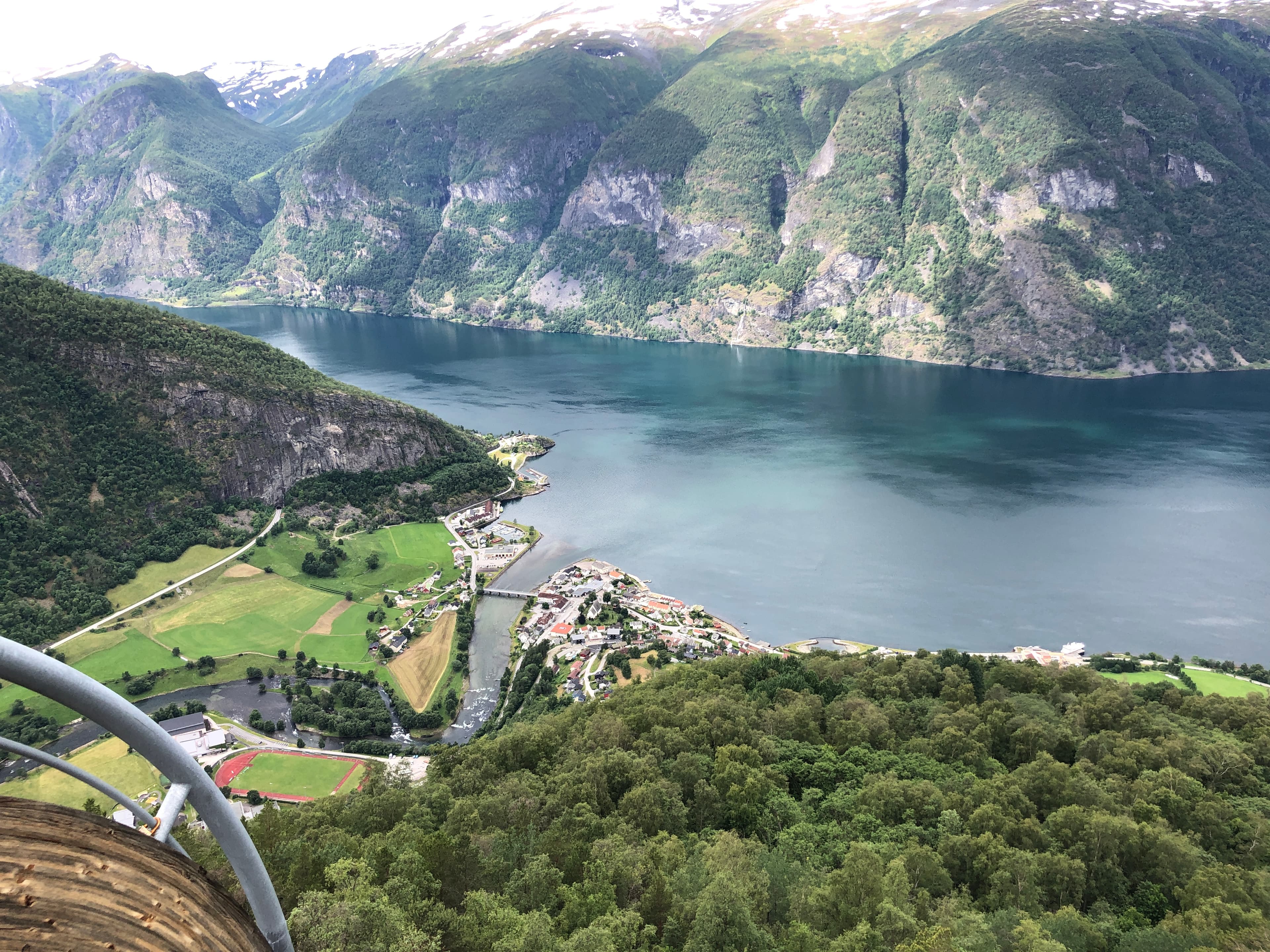
Photo: Davide Mauro / Wikimedia Commons / CC BY-SA 4.0
Oslo to Bergen is one of Norway's great classic drives. But why take the same road back? With two different routes you see twice as much – without covering a single kilometre twice. One route runs through Valdres, past Tyin and down to the Sognefjord and Flåm. The other crosses Hardangervidda, past Vøringsfossen and through Hardanger. Together they make a round trip of roughly 990 km through some of the finest scenery Norway has to offer.
How the round trip works
The concept is simple: drive one route to Bergen and an entirely different one back. Both legs take about 7–8 hours of driving. The round trip can be done in a week if you're efficient, but ten days gives you plenty of time for hikes, fjord experiences and unhurried days along the way.
With a campervan it's usually best to leave room for improvisation and avoid too tight a schedule.
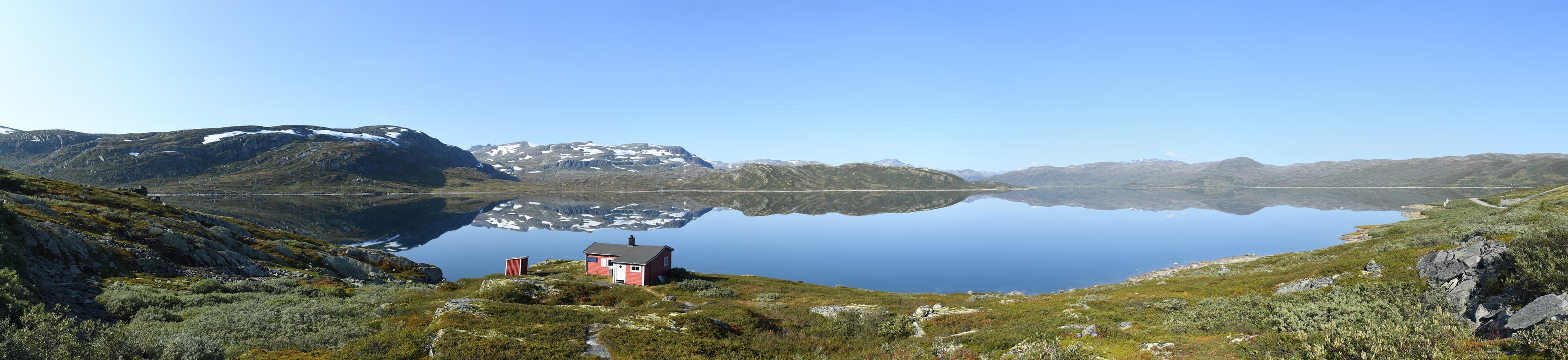
Photo: Carsten Steger / Wikimedia Commons / CC BY-SA 4.0
Route 1: Oslo → Bergen via Valdres and Flåm (~530 km)
Through the interior of southern Norway, over the mountains and down to the Sognefjord. The landscape changes completely along the way.
- Fagernes – The main town in Valdres and a natural place to refuel and stretch your legs.
- Tyin – A mountain lake at 1,084 m. Take the Tyin–Årdal road (Rv53) downhill – steep switchbacks, wild scenery and one of Norway's most dramatic mountain roads.
- Årdal – Gateway to the Sognefjord. If you have time, take the detour to Vettisfossen – Norway's highest free-falling waterfall (275 m). From here you continue to Lærdal.
- Lærdal – Old timber buildings and a peaceful atmosphere. Then through the Lærdal Tunnel (the world's longest road tunnel, 24.5 km) to Aurland.
- Flåm and Aurland – Famous for the Flåm Railway, but just as good as a base for kayaking on the fjord. Don't miss the Stegastein viewpoint – one of the best vistas in the country.
- Gudvangen and Nærøydalen – UNESCO-listed fjord landscape. The road through the valley is narrow and steep.
- Voss – Outdoor capital with rafting, mountain hikes and a good food scene. A great overnight stop.
- Bergen – Bryggen, Fløibanen and Fisketorget. Set aside at least a full day.
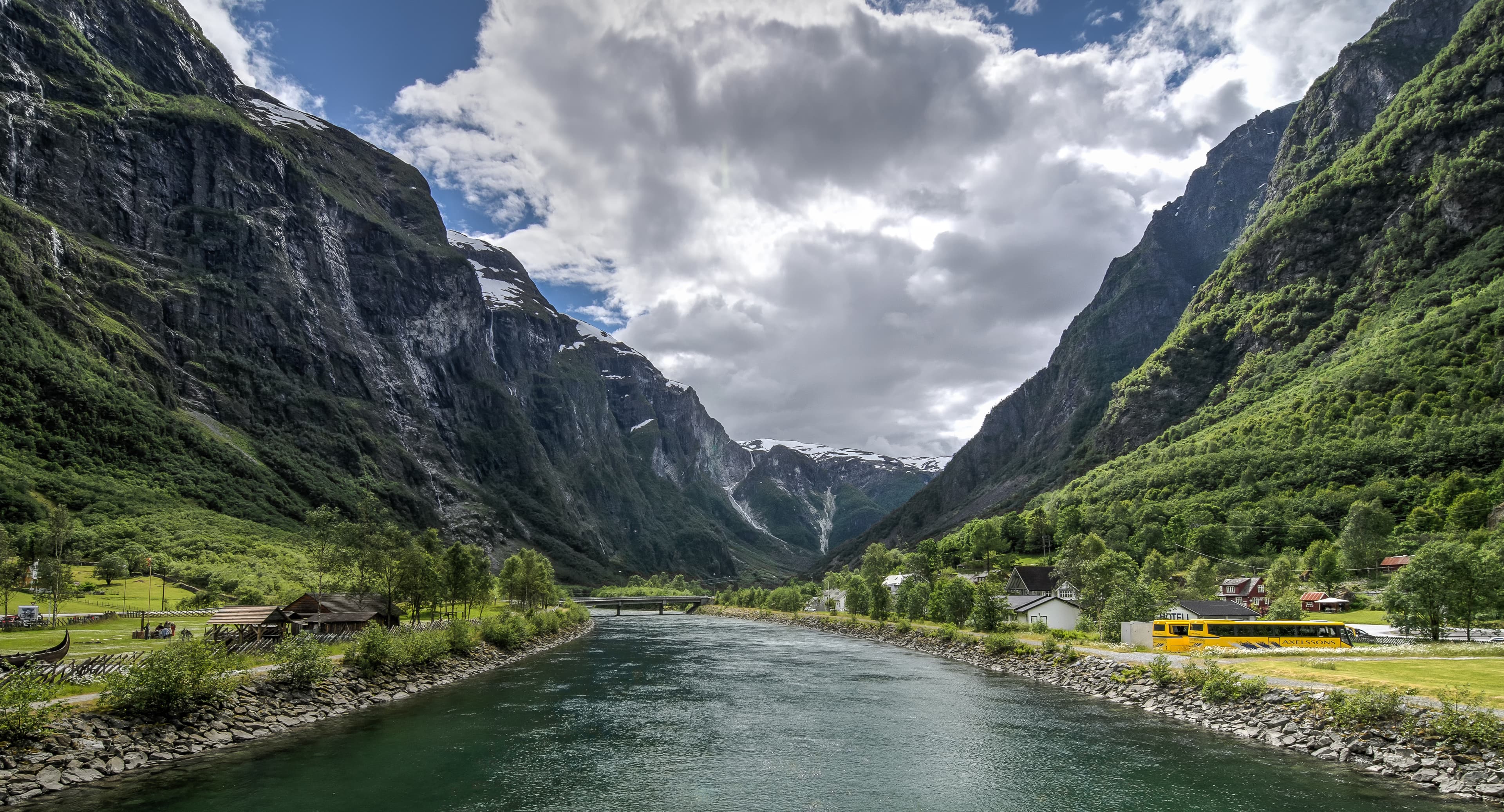
Photo: Edmundo Sáez / Wikimedia Commons / CC BY-SA 4.0
Route 2: Bergen → Oslo via Hardanger and Hardangervidda (~460 km)
Back through an entirely different landscape: fruit blossom along the fjord, Norway's most famous waterfall and Europe's largest mountain plateau.
- Norheimsund – A quiet village by the Hardangerfjord. A nice stop for lunch.
- Steindalsfossen – A waterfall you can walk behind. Free and right by the road.
- Eidfjord – A small village at the head of the Hardangerfjord and the gateway to Vøringsfossen.
- Vøringsfossen – Perhaps Norway's most famous waterfall, a tourist attraction for centuries. A 182-metre free fall and a viewing bridge over the Måbødalen valley.
- Hardangervidda – Europe's largest mountain plateau. Open, silent and wild. The road across (Rv7) is an experience in itself, with short hikes right from the roadside. Plenty of room for free camping here too, with views across the highlands.
- Geilo – Mountain village halfway between Oslo and Bergen. A good base for hiking and cycling.
- Gol – Stave church and the last mountain stop before Hallingdal opens towards the lowlands.
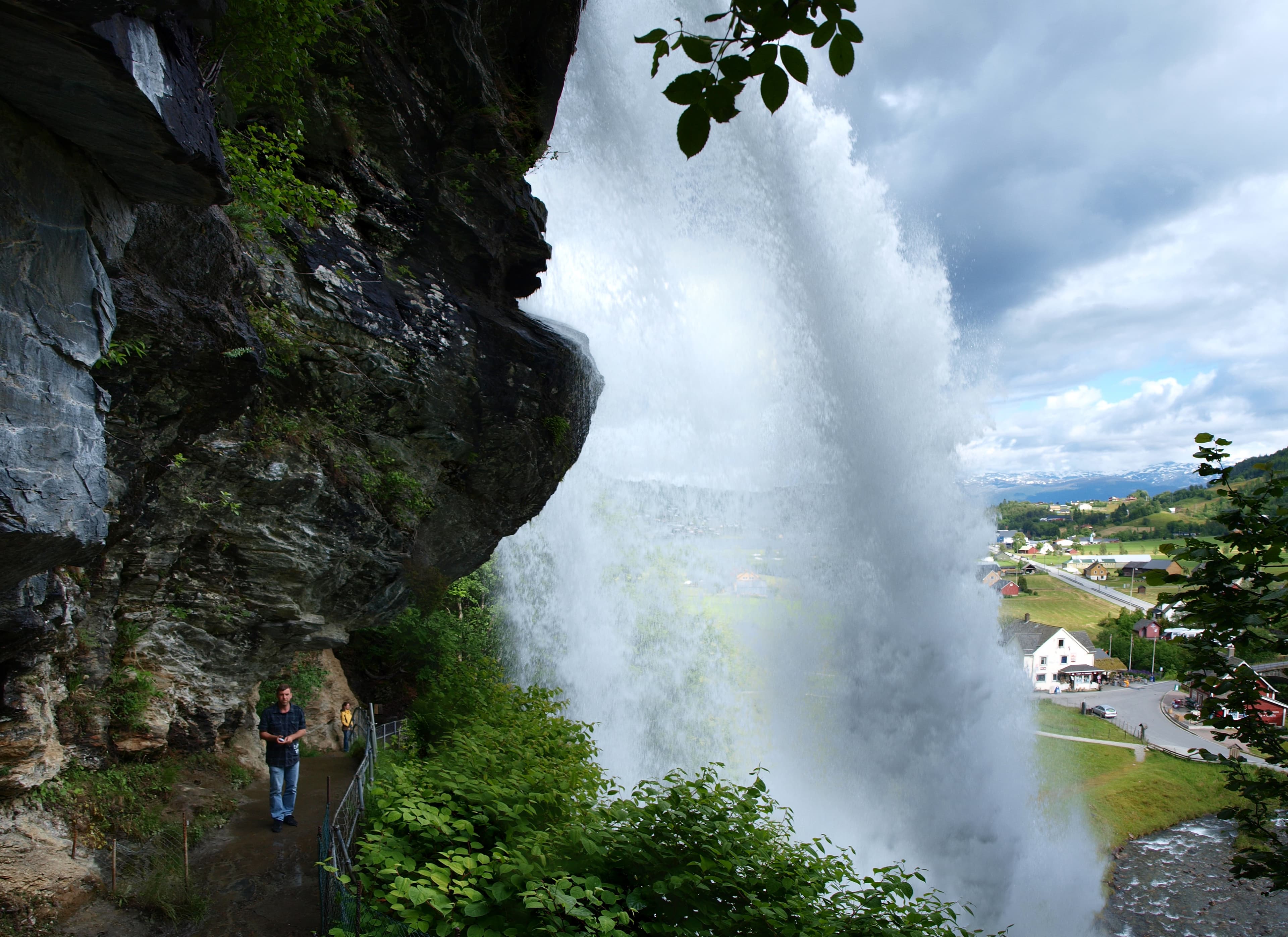
Photo: Jeblad / Wikimedia Commons / CC BY-SA 3.0
Overnight stays along the way
Both routes have good options for overnight stays, at campsites and as free camping.
- Route 1: Campsites in Fagernes, Lærdal, Flåm and Voss. Aurland and Gudvangen also have sites.
- Route 2: Campsites in Eidfjord, on Hardangervidda and in Geilo.
- Free camping is allowed with a campervan in Norway, as long as you park legally and keep your distance from houses.
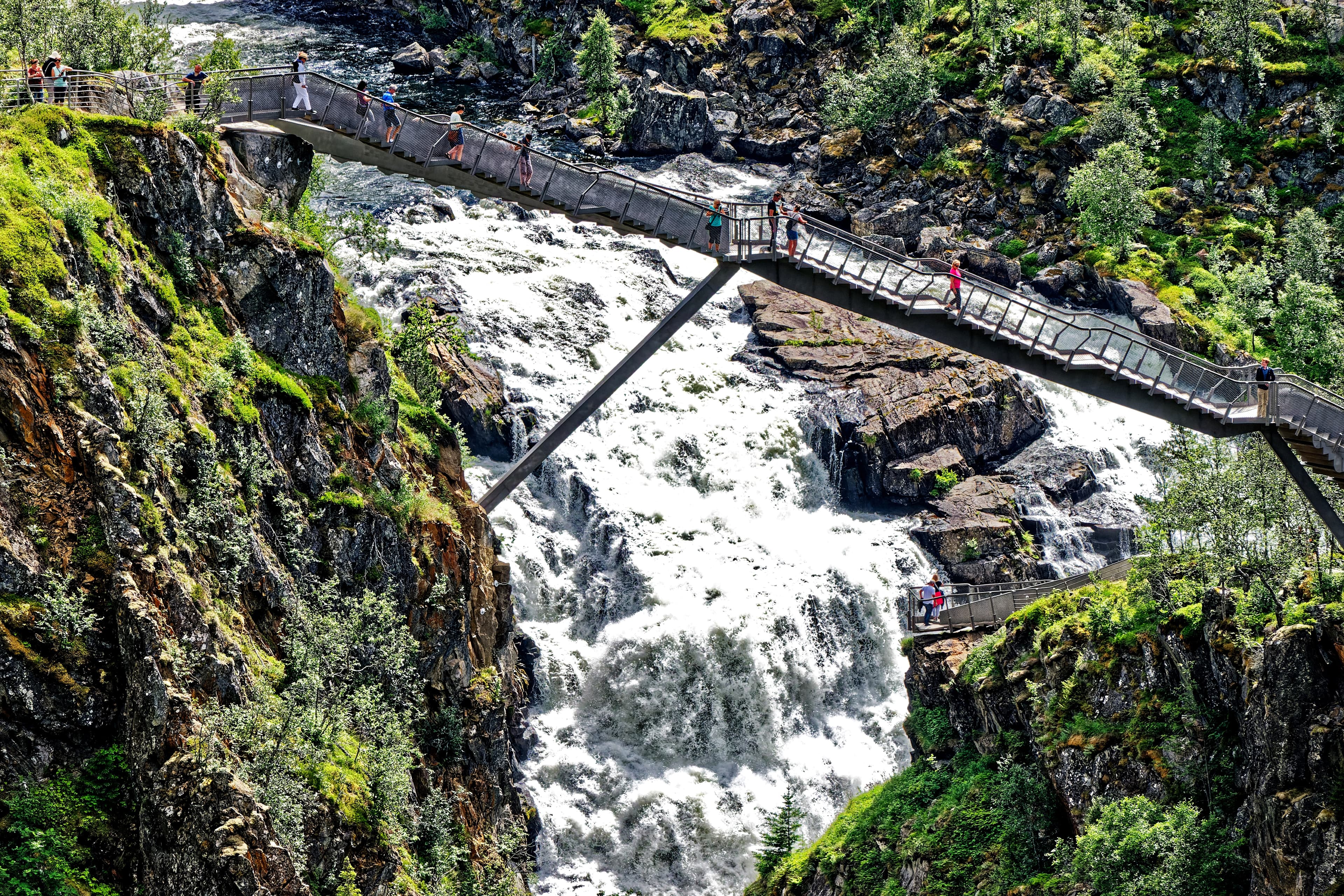
Photo: Holger Uwe Schmitt / Wikimedia Commons / CC BY-SA 4.0
Practical tips
Worth knowing before you set off:
- Distance: Approx. 990 km round trip without detours.
- Time: 7–8 hours driving each way. Doable in a week, but ten days gives you good time for the stops.
- Fuel: Fill up in Fagernes, Lærdal, Voss, Eidfjord and Geilo – stations are sparse in the mountains.
- Season: The Tyin–Årdal road (Rv53) and Aurlandsfjellet may be closed in winter. Check vegvesen.no for status. Best time is June–September.
- Ferries: The entire route is ferry-free.
- Tolls: Both routes have some toll stations. An AutoPASS tag gives you a discount.
990 km, two landscapes
Fjords, waterfalls and high mountains in under 1,000 km, without driving a single stretch twice. Oslo–Bergen–Oslo on two different routes is one of the finest round trips you can do by campervan in Norway.
The whole route is ferry-free. Allow ten days if you want time for Stegastein, Vøringsfossen and a day in Bergen.
Check available dates →